These robots that look like us
When design becomes a matter of social acceptance
Planète Robots, #95, Jan–Feb 2026
The article shows that when it comes to accepting a humanoid robot, rather than focusing on its technical performance, we pay more attention to how well its look and behavior fit with our psychological projections (emotions, archetypes, culture). Phenomena such as the Uncanny Valley play a key role in this.
From the early design stage, ethical and cultural choices are decisive so that robots adapt to human contexts and values, rather than the other way around.
Compleet original version
IntroductionBehavior, interaction and psychology: a mirror for our expectationsBeyond appearance: how realistic are the behaviors?
The Uncanny Valley: turning a constraint into an opportunity
The designer's approach: from primary emotions to subjective projections
The robot as companion: projections and archetypes
The gendered robot: Anima and AnimusAesthetics and visual styles: a gallery of possibilitiesHow to apply a classification
Styles by context of use
Ambiguous designs, to handle with care
The path to neutralitySociocultural and ethical context: The stakes of designA paradox when facing the unknown
Geographic and cultural variations
Early answers to the ethical questions raised by the "promise" of design
Architecture iteration and regulationConclusion: choosing the robots we deserve
IntroductionFor a little over a year now, driven by a wave of new start-ups, social media has been captivated by a new fascination: AI-powered humanoid robots whose behavior is unsettlingly realistic. These spectacular demonstrations raise new questions for society. How far do we want a machine to resemble us? How much autonomy are we willing to give these future "assistants"? How much trust can we place in them?For most of us, these questions still belonged to science fiction not long ago. Yet for several decades now, they've been part of daily life for a handful of healthcare professionals and their patients fitted with advanced prostheses and orthoses. Through daily collaboration, the user forms an attachment to their bionic hand or walking exoskeleton. These extensions of the body turn a functional question into a deep inquiry about our own humanity.Today, we're crossing that same threshold in other fields. This experience translates neatly to the general case of the humanoid robot, whether it's a home assistant or an industrial cobot. These machines are no longer mere technical curiosities — they're about to share our living spaces, our workplaces, perhaps even our most intimate moments.French players such as Enchanted Tools and Wandercraft, inspired by the excellence of Aldebaran, are developing a distinctive vision of this robotics field: a "Humanoid French Touch" where aesthetics and function speak to each other. On other continents, our engineers are sought after and recognized for the qualitative value they bring to development. This is the legacy of a culture built on careful design, where every detail of an object must tell an implicit story, must create meaning. This identity has its roots in the "French-style" luxury craftsmanship that has made our worldwide reputation for centuries.The question is no longer "can we create humanoid robots?" but "which robots do we want to create?" Because behind every design choice — a translucent or opaque skin, expressive or neutral eyes, a warm or mechanical voice — lies a projection of who we are, of an ideal we're chasing, or a fear we're trying to tame. We accept (or reject) an intelligent machine not simply because it works, but because it resonates with our identity and our values.
Behavior, interaction and psychology: a mirror for our expectations
Beyond appearance: how realistic are the behaviors?A robot can look as appealing as possible, yet still be rejected if its behavior betrays our expectations. Take something as simple as movement speed. A robotic arm that moves too fast and too loudly in a shared space triggers a fear reflex, even if it's objectively safe. Conversely, a robot that's too slow becomes frustrating and loses credibility. There's an acceptable "choreography," and it varies by context.Facial expressiveness is a minefield. We unconsciously scan 43 facial muscles to decode human emotion. A robot simulating 15 of them might seem expressive… or deeply fake. Worse still, mistimed expressions — a smile that lingers too long, a gaze that never blinks — create a diffuse unease. This is at the heart of the Uncanny Valley.Voice carries a considerable emotional weight. Current voice assistants like Alexa or Siri have carefully calibrated their tone: human enough to feel pleasant, artificial enough not to mislead. But once that voice comes from a body, expectations shift dramatically. We're far less tolerant of an artificial voice coming from a humanoid robot than one coming from a speaker.Arm body language, and hand dexterity in particular, play a crucial role. Without even thinking about it, our hands perform an astonishing range of complex gestures: picking up an egg without cracking it, shaking a colleague's hand, pouring liquid between two containers, handling a screwdriver with force and precision, lifting a pack of bottled water… Today's humanoid robots are progressing quickly in this area, but they're still far from our natural dexterity. This limitation strongly shapes which uses are realistic, and how well the robots are accepted.
The Uncanny Valley: turning a constraint into an opportunityThe concept of the "Uncanny Valley," coined by Japanese roboticist Masahiro Mori in 1970, describes an unsettling phenomenon: our empathy for robots grows with their human likeness… until it hits a critical point, where it collapses sharply. A stylized robot like Pepper or Mirokaï wins us over. A robot with an almost-human face like Sophia unsettles us. But a real human reassures us completely.
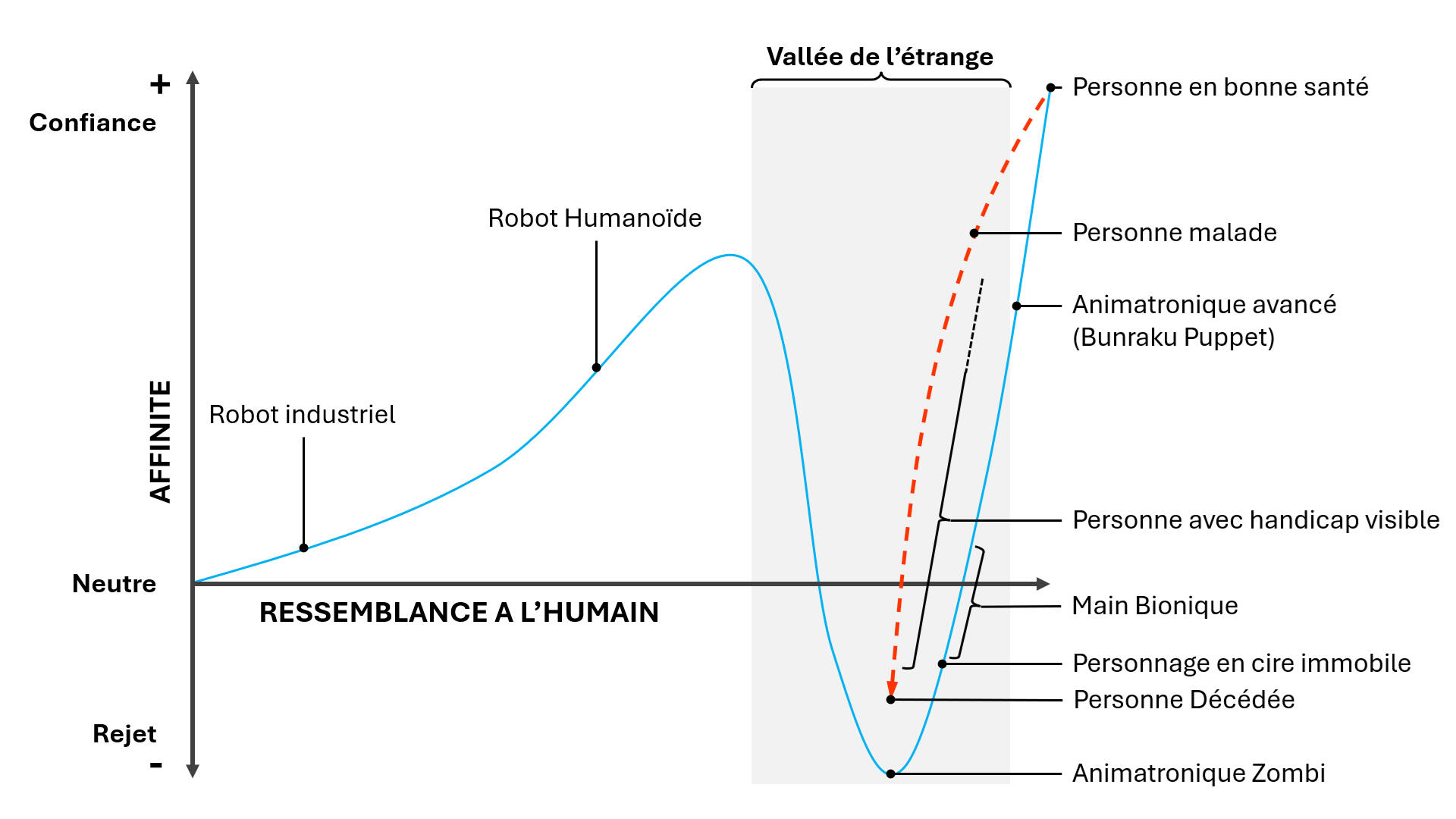
The Uncanny Valley: this graph plots an object's or being's degree of human likeness against the emotional response it triggers in the observer.Why this sudden drop? Several hypotheses coexist. The evolutionary explanation suggests our ancestors needed to detect signs of illness or impending death. A face or hand that's almost human but slightly "off" would trigger those ancestral alarms. The cognitive hypothesis points to a dissonance: seeing a human-like appearance, our brain expects fully human behavior. Any "abnormal" detail creates a rupture and grabs our attention.So how do we get past this valley? Some researchers suggest the Uncanny Valley is just a temporary phase — the more we live alongside realistic robots, the more our brains will gradually adapt. Others believe the valley will be crossed through a sudden, forced event that pushes us to accept artificiality as part of daily life. Either way, the "affinity" we feel toward a robot remains a subjective, holistic judgment that depends, for each person, on multiple factors (culture, exposure, context…) which shift across generations.Likewise, the inverted curve shown here, linking a visibly sick or disabled person to distrust or rejection, doesn't describe any objective or desirable reality: it merely illustrates primal instinctive reflexes or unconscious societal biases, not a judgment on the worth, humanity, or acceptability of these individuals. Fortunately, these biases are most often reduced, or even erased, through knowledge, empathy, and everyday acts of solidarity.Interestingly, the bionic hand designed for amputees contributes to this too, though not in the way Mori originally framed it. In his essay, he mentions the myoelectric prosthesis only as an example of something that falls into the valley: its near-perfect resemblance to a real hand, undercut by its coldness or the rigidity of its grip, provokes unease rather than acceptance. Some researchers have actually criticized this passage as ableist, placing the burden for the observer's discomfort onto the disabled person.
Yet today, the opposite is happening: by making prostheses and exoskeletons mainstream as tools of care, autonomy and performance, we are changing how humanized technology is perceived. This positive reframing, born from medical use, is likely paving the way for better acceptance of humanoid robots.And indeed, we can already see that by gradually humanizing technology through the use cases of prostheses and exoskeletons, we are preparing the ground for humanoid robots to be better accepted.
The designer's approach: from primary emotions to subjective projectionsUntil now, designers have relied on Don Norman's model, mapping different design elements to three cognitive levels of varying depth.Visceral Design focuses on appearance and first impressions. It's meant to trigger the desire to own an aesthetically appealing object.Behavioral Design emphasizes ergonomics, performance and user experience. It's meant to trigger the desire to control an object that makes us feel smarter in front of others.Reflective Design deals with self-image and emotional connections to past memories and experiences. It's meant to trigger the desire to complete one's persona with an object that tells a story about oneself, like a mirror of our unconscious and our ego. This is the level of design that allows objects to stay meaningful over time.Like a set of Russian nesting dolls, these three emotional levels nest inside one another, from the most superficial to the deepest, letting the designer tailor their approach to the user depending on the kind of interaction they're aiming for.
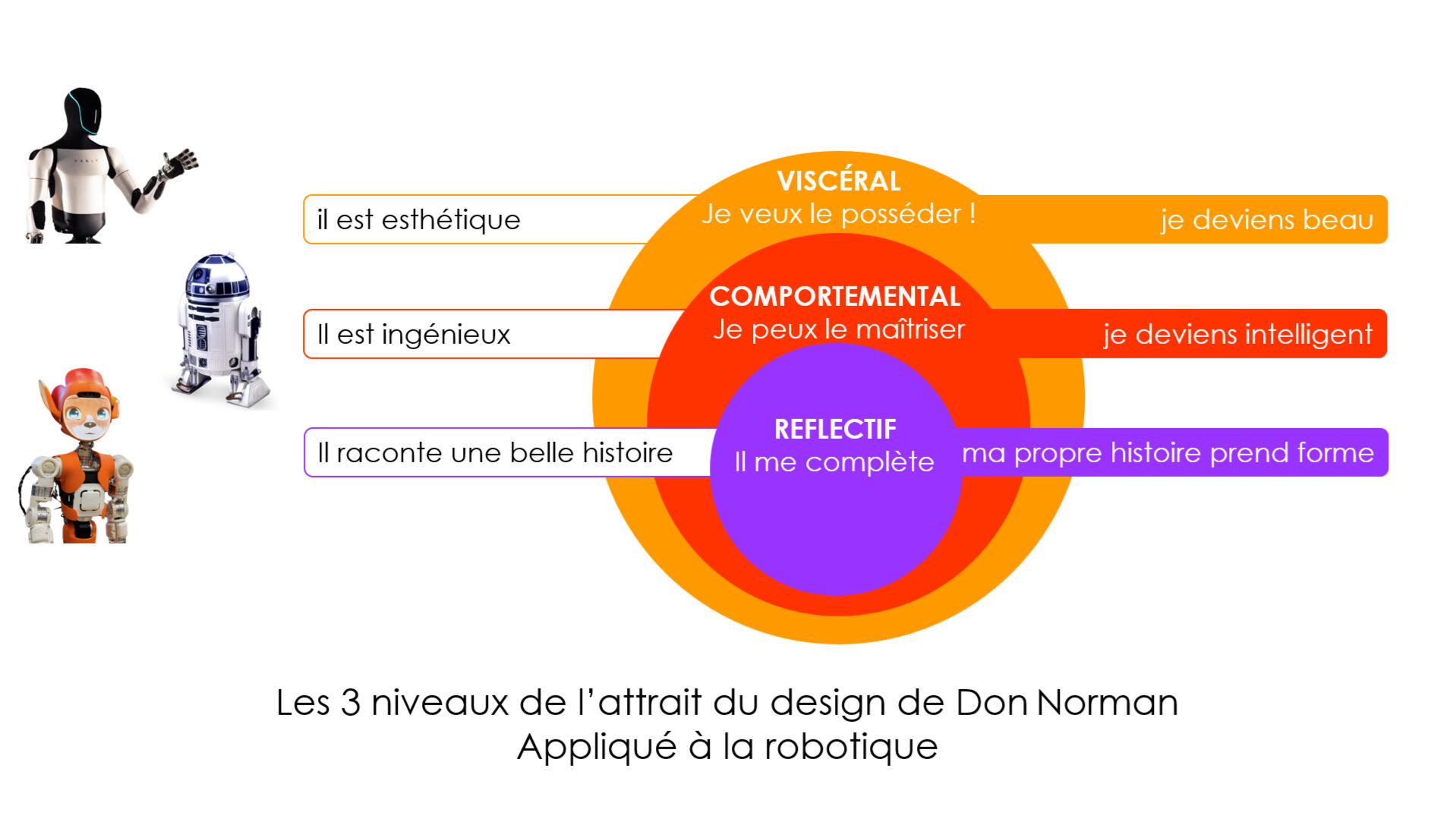
When it comes to robot design, the closer it gets to a "humanoid" form, the stronger and more universal the emotional projections become, reaching straight into the most receptive "reflective" layer of the mind.This explains the widespread fascination with the topic, and justifies everyone's right to hold an opinion on it, however informed. This framework also helps explain part of the Uncanny Valley theory. A zombie animatronic in a theme park tells a dark story we don't want to identify with — except on Halloween.But above all, this unique position of the humanoid robot places a real responsibility on the designer.They're obligated to think their model through carefully, all while accounting for the constraints of mechatronic architecture and the mechanical limits of materials. Our environment is highly varied and sometimes hostile. A broken bone heals, skin scars over — but a robot needs a network of "specialized mechanics" with a spare-parts supply chain, much like in the automotive industry. These constraints often force the designer to make compromises and drift away from their original ambitions, risking a slide into the Uncanny Valley.
The robot as companion: projections and archetypesTo understand our future relationship with humanoid robots, let's look at our current "companions."Starting with our car, or any other personal means of transport, which for generations has been seen as an extension of our identity. A helpful companion to which we often attribute human traits — a nickname, a personality — like a mirror of who we are. Sporty, understated, family-friendly, luxurious, a convertible — it says something about us, both to others and to ourselves.Our pets are also loyal life companions. Your dog greets you with boundless joy every time you come home. It doesn't judge, doesn't betray you, offers unconditional presence, even a listening ear. This is also what AI chatbot users have been looking for since the arrival of ChatGPT, and it's what we can expect from personal humanoid robots.As you've probably gathered, our humanoid robots won't just be simple possessions: we project psychological dimensions of ourselves onto them. Carl Jung, a psychiatrist and the founder of psychoanalysis, would call these archetypes: the Loyal Companion, the Protector, the Devoted Servant… So many innate patterns of thought and behavior, shaped further by our upbringing and experience, that we follow unconsciously depending on the situation or the kind of interaction we need.Humanoid robots naturally fit into these pre-existing mental patterns. An eldercare assistance robot activates the archetype of the Caregiver in our unconscious, and we expect it to act accordingly. But be careful: if the design is clumsy, it can slip into the archetype of the irresponsible child or the nitpicking overseer, triggering distrust and rejection.
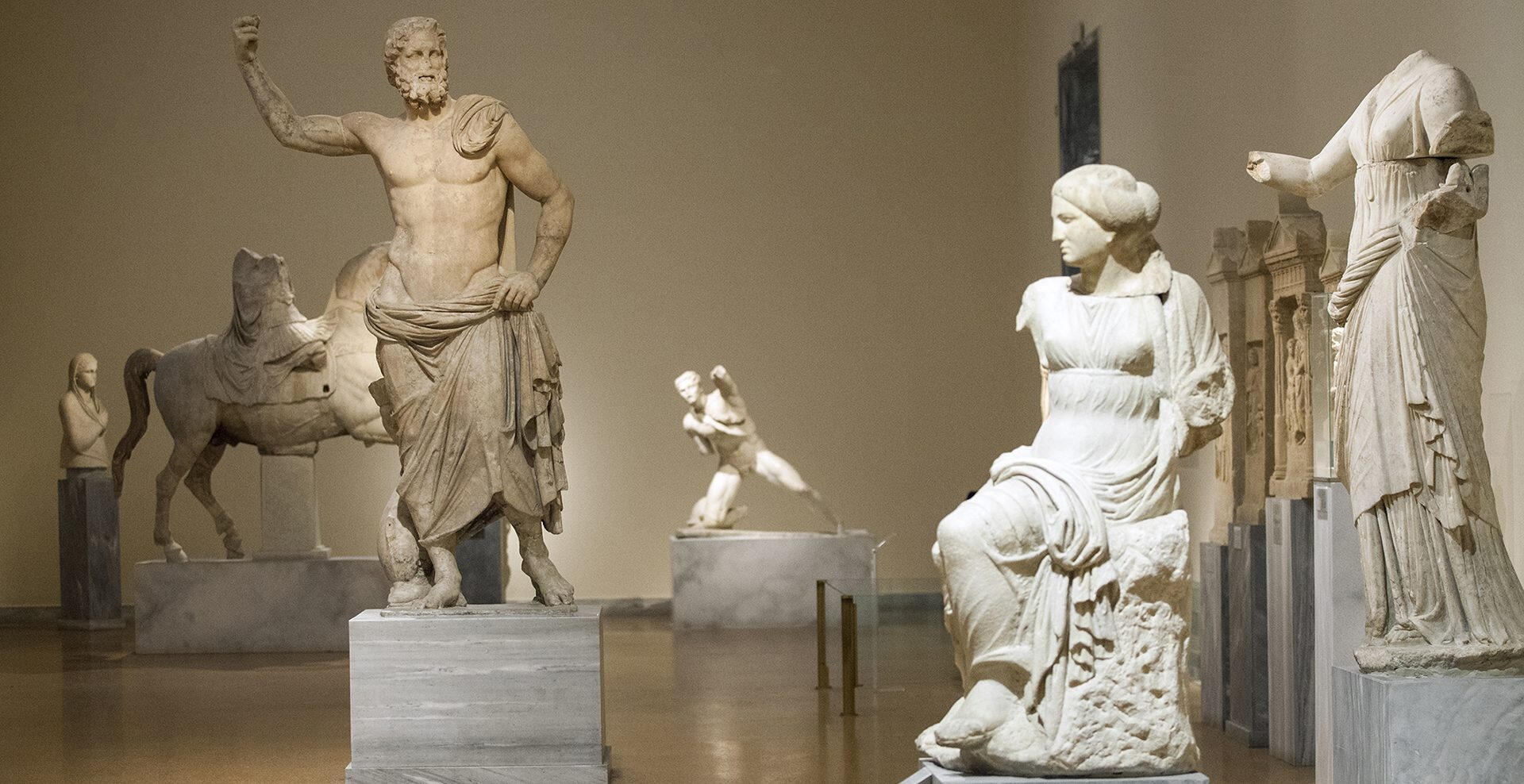
Statues held at the National Archaeological Museum of Athens. The gods of the Greek pantheon were a major influence on Jung's models — he was also interested in mythologies from the Far East and South America.A quick disclaimer: contrary to what's commonly said, Carl Jung never defined a fixed list of 12 archetypes — rather, he offered models that illustrated specific examples. He was a pioneer of psychoanalysis, a subjective science that varies from one subject to another, an inexact science like any branch of medicine, but statistically representative of a certain reality when practiced by experienced professionals.
Since his time, over 60 years ago, other researchers have built on his work and defined segmented lists of archetypes, sometimes as few as 8 or even more, sometimes with subcategories or pairs of opposites, presumably useful for certain areas of study or certain contexts. But there are also plenty of "alternative medicine" practitioners and other peddlers of wishful thinking who have appropriated these models and their "scientific" image as an argument from authority. In the age of the internet and endless opinion-sharing, it's become difficult to trace back his core ideas and the limits of his work — short of reading his original writings and keeping a critical mind.
The gendered robot: Anima and AnimusAmong all the archetypes, Carl Jung placed particular emphasis on the Anima (feminine model) and the Animus (masculine model) as complementary primary forces within our psyche. These dimensions show up in the design of many humanoid robots, often unintentionally, and strongly shape our reactions. It's worth noting that these archetypes, whether gendered or not, vary from one person to another, one generation to another, or one country to another, depending on each individual's frame of reference.The feminine mythological approach, "Anima": It draws on the imagery of a "benevolent divine creature." The film Metropolis (Fritz Lang, 1927) features the iconic Maria, transformed into a robot (whose look later inspired C-3PO). More recently, the robot Ava in Ex Machina (Alex Garland, 2014) heavily influenced Sophia (Hanson Robotics) and Ameca (Engineered Arts). Another variation appears in Alita: Battle Angel (Robert Rodriguez, Jon Landau, James Cameron, 2019), with a design beautifully realized by Vitaly Bulgarov.
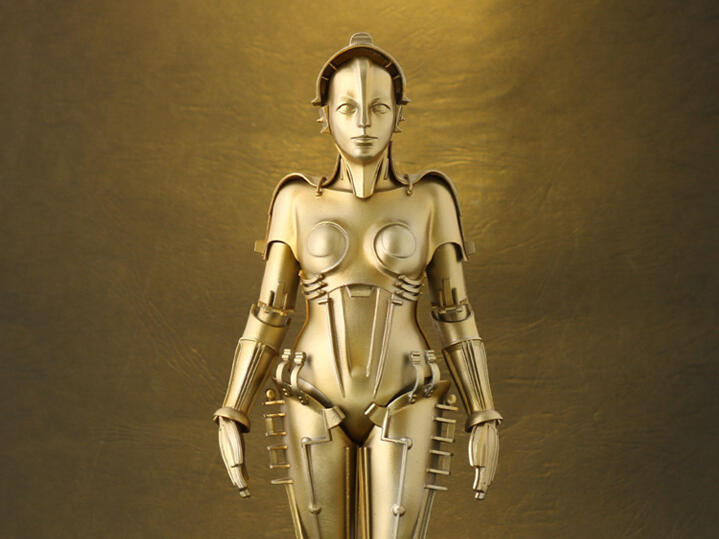
These feminized humanoid robots, with their delicately sculpted features, translucent skin or finely detailed ceramic-like texture, evoke ancient goddess statues coming to life. The goal here is to create collaborative robots whose feminine features encourage certain behaviors: capturing attention, rallying people around a project or event, offering empathetic and caring support, or passing on knowledge and vision.This aesthetic is appealing through its "nobility," but it can also spark spontaneous, unconscious distrust. Based on personal experience, a user might fear a kind of condescension from the robot, or even dread a form of Hubris — that pretension to rival the divine, tipping over into contempt for humans and their weaknesses.The masculine mythological approach, "Animus": This is the opposite path. In most mythologies, male gods wield destructive powers, maintaining order through the threat of chaos. Robots designed on this model are common in science fiction. The films Terminator (James Cameron, 1985), RoboCop (Paul Verhoeven, 1987), and Avengers: Age of Ultron (2015) feature robots with "Alpha" traits who try to impose their rules through force, sowing devastation in a dark, dystopian future.

In practice, this type of design has limited value for genuine human-machine collaboration. We sometimes see publicity stunts featuring steroid-fueled humanoid robots proudly wearing a police or military uniform. But for now, their fragility, reaction times, and autonomy in sensitive decision-making make them poorly suited to real operations. Law enforcement and armed forces tend to favor solutions with a body shape better suited to real-world terrain, kept under human control.
Aesthetics and visual styles: a gallery of possibilities
How to apply classificationThere have been many attempts to classify robot morphology. Beyond the original and anecdotal approaches of zoomorphism (animal-shaped robots) or phytomorphism (plant-shaped robots), humanoid robots fall under a functional anthropomorphism. Their human shape lets them adapt to an environment built by and for humans. That's why they're entering our daily lives — though we still need to accept them by our side.This acceptance hinges on a key factor: predictability, since we naturally feel wary of the unknown. Adopting a functional robot depends on the consistency between what we imagine it will do and what it actually does. For that promise to be kept, there needs to be harmony between the robot's appearance, the "promise" that appearance evokes in our own frame of reference, and its actual effectiveness.Let's look at today's humanoid robots, real or fictional. Their visual diversity tells just as many different stories. Their context of use lets us classify them pragmatically into several design styles, each carrying its own promise, sometimes a deeper symbolism.
Styles by context of useThe Raw Industrial style :This style embraces technical transparency. Calvin 40 (Wandercraft) or Digit (Agility Robotics) expose their servomotors and their particular biomechanics. The head is simplified or absent altogether, and the grippers are basic, built specifically for the tasks at hand.
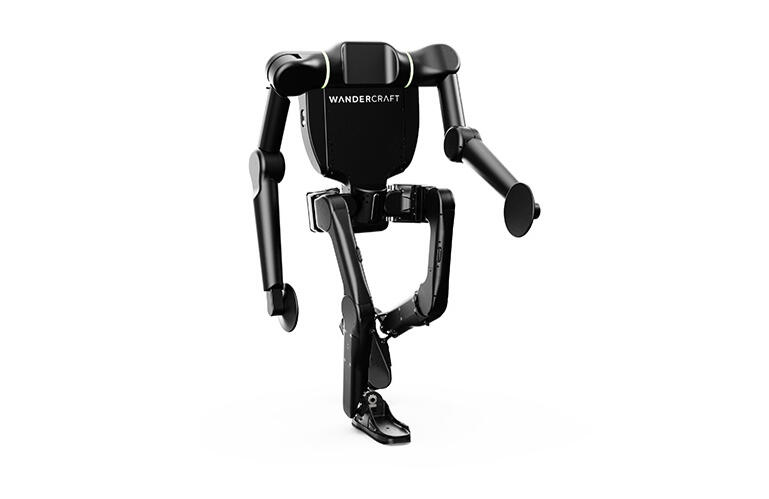
Calvin 40 by WandercraftThis visual honesty is reassuring, since these robots hide nothing — they're tools before they're companions. This is the preferred aesthetic in industry, where cobots need to inspire trust through predictability across a defined range of tasks in a controlled environment. They're already being rolled out, for instance at Amazon or Renault, and integrate easily into teams.The move toward an augmented raw utility robot:This style builds on the industrial look. Human biomechanics have been pushed further to adapt to a more varied environment and more complex tasks. These robots are large, their limb proportions closer to human proportions, their grippers gain in dexterity, more powerful motors let them lift objects too heavy for a human, and their dynamic capabilities rival those of a top athlete.
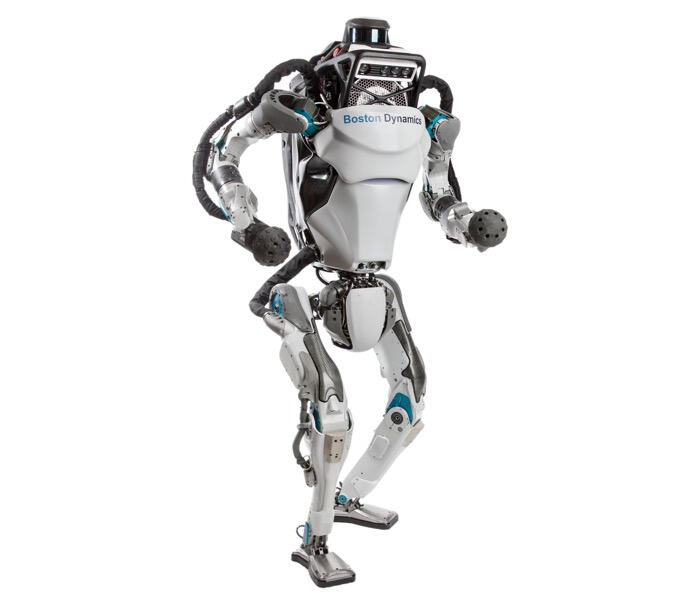
Atlas Version 1 by Boston DynamicsThese projects remain at the prototype stage for R&D teams, since acquisition and maintenance costs are still too high for commercial use. The look stays highly mechanical, with visible components. This mismatch can be surprising, even unsettling, since we're looking at a machine with a "basic" appearance whose biomechanical behavior, versatility and autonomy are strangely close to — or even beyond — human capability.The versatile efficient servant:This pushes humanization even further. It's the category currently trending in the US, Canada and China: Optimus (Tesla), F (Figure AI), Atlas V2 (Boston Dynamics), Apollo (Apptronik), Neo (1X), G1 (Unitree), Phoenix (Sanctuary AI)… They share a design inspired by the film I, Robot (Alex Proyas, 2004), which set a standardized collective vision of humanoid aesthetics. The chassis and servomotors are partly concealed behind sleek body panels, typically light-colored, white or aluminum. Multi-jointed hands allow for complex dexterity. A mobile neck orients the cameras the way we move our eyes to follow an action. The head is proportionate, but the face is absent or merely suggested, often replaced by a mysterious dark visor, like a smartphone on standby. Colored lights glow through the surface, signaling active functions or simulating emotions, reminiscent of the futuristic costumes worn by the musicians Daft Punk (French Touch, once again!).
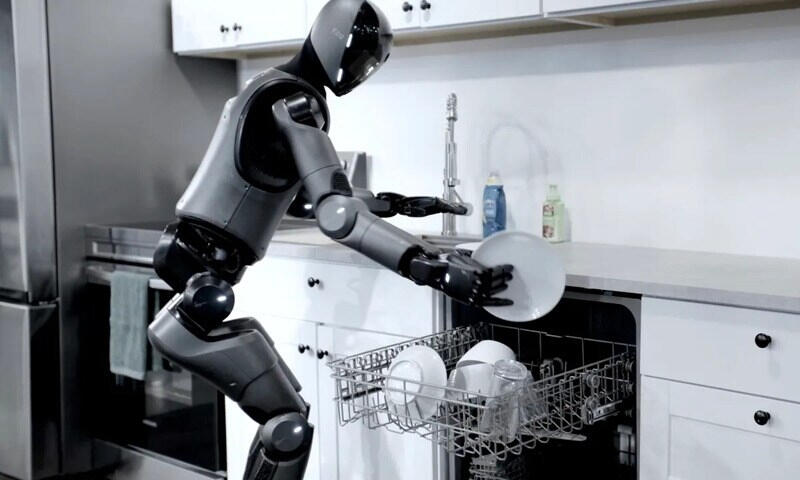
F02 with Helix architecture by Figure AIImmediate applications are mainly targeting industry, for complex and varied handling of light objects, or on-site logistics in the service sector. The stated ambition remains domestic use for household chores. It's this last, highly promising opportunity that's drawing investors and fueling the buzz on social media.The communicating companion:This style offers maximum creative freedom and embraces its artificial nature while still seeking emotional attachment. From C-3PO in Star Wars (George Lucas, 1978) to the robot Pepper (Aldebaran) or Mirokaï (Enchanted Tools), this family shares common traits: big round eyes, slow movements, an expressive face reminiscent of an attentive, obedient, helpful child.
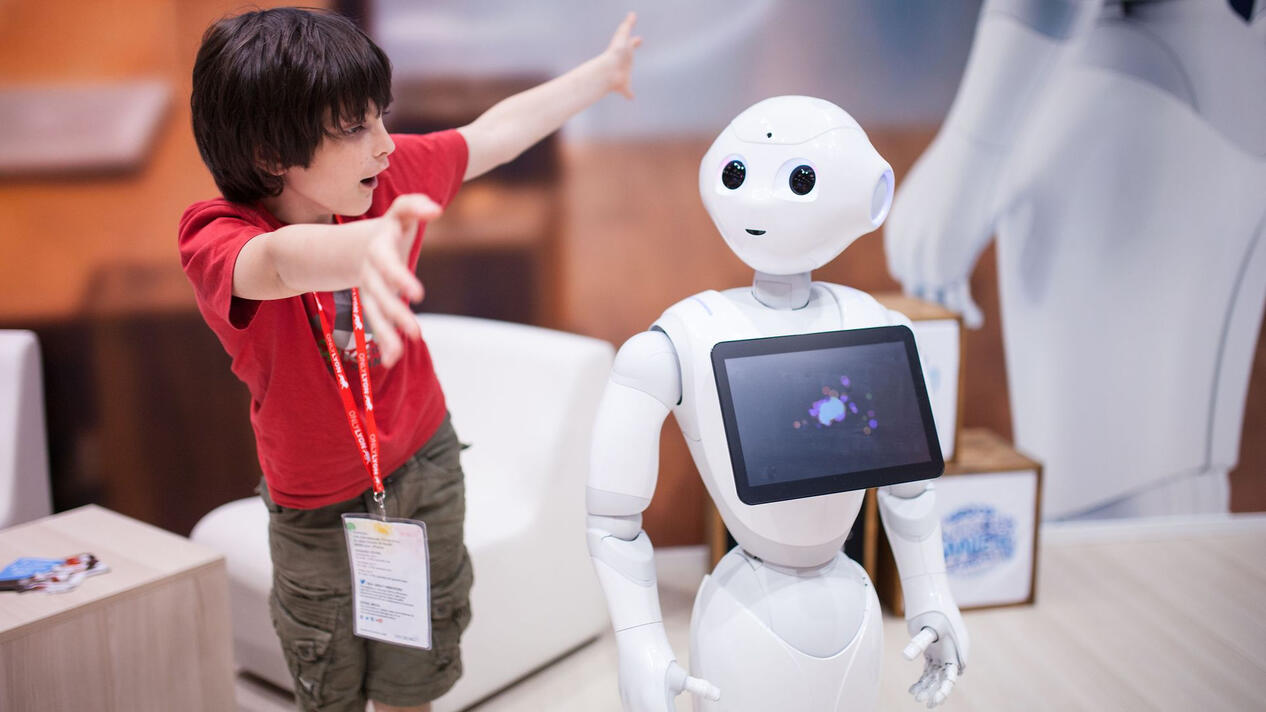
Pepper by Aldebaran (ex-SoftBank)Their strength and size are deliberately kept modest. They interact with humans without pretending to be human, which makes trust and communication easier.True to the promise of their appearance, they achieve strong adoption. We already find them among vulnerable populations: hospitals, retirement homes, schools.
Ambiguous designs, to handle with careThe hyperrealistic android:Hyperrealistic androids aim for the perfect illusion. The most famous cinematic example remains Blade Runner (Ridley Scott, 1982), where Roy, played by the elusive Rutger Hauer, is a perfect android, a "Replicant" superior to humans, searching for meaning in his "life," and (spoiler alert) finding it through compassion, sparing Detective Deckard (played by Harrison Ford) moments before he "shuts down." In his final scene, Roy delivers a haunting monologue, one of science fiction's most quoted moments, best experienced by watching the movie itself.
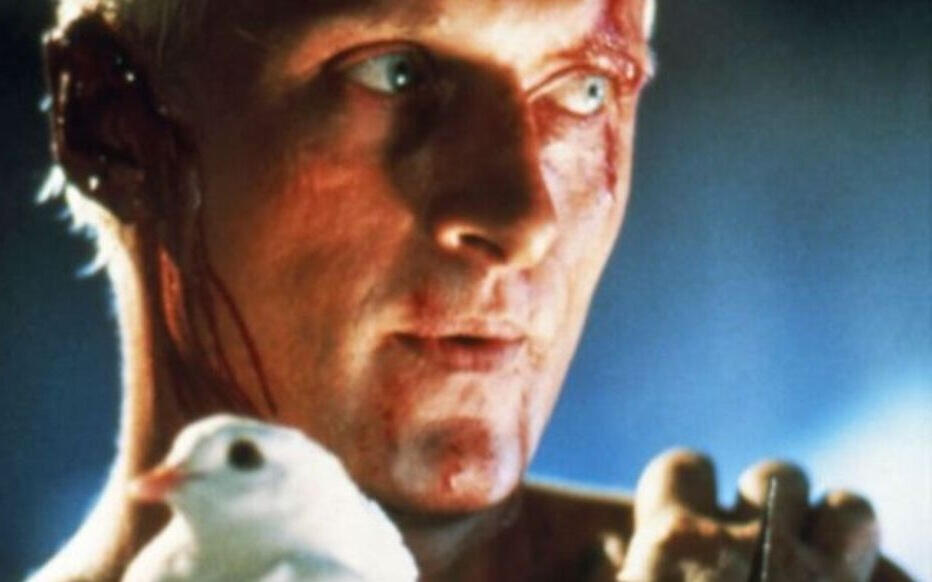
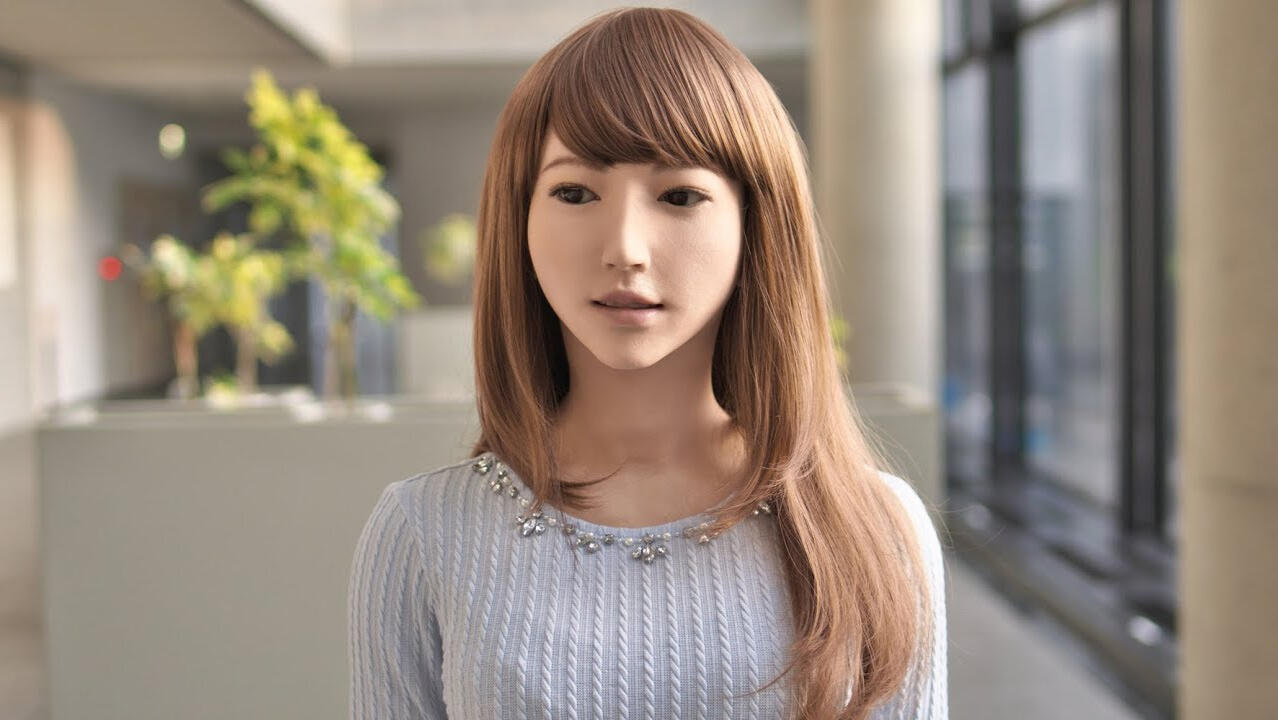
The replicant leader in Ridley Scott's film Blade Runner (1982)"I've seen things you people wouldn't believe. Attack ships on fire off the shoulder of Orion. I watched C-beams glitter in the dark near the Tannhäuser Gate. All those moments will be lost in time, like tears in rain…"In reality, research projects such as Erica (Hiroshi Ishiguro) reach a disturbingly realistic level: silicone-textured skin, a face that adapts expressively to context, blinking eyes, natural movements. But this illusion quickly runs into 200,000 years of homo sapiens evolution. Our brain detects the slightest detail that breaks the illusion and instantly triggers unease at this "abnormal" being. We slip into the famous "Uncanny Valley."
In bionics, the phenomenon is similar. A hand prosthesis isn't just a functional tool: it must allow the person to recognize themselves, to project their identity. Rather than displaying a bold, colorful design that turns the prosthesis into a visible, valorized object, some patients choose discreet hyperrealistic prostheses in order to "disappear" into normality, into the gaze of others or into the image they see of their own body.Dressing a robotic hand with artificial skin doesn't work well. At the slightest movement, overly visible abnormal creases appear, and the silicone commonly used wears out too quickly. Most often, the most realistic "aesthetic" hands are passive, motionless, which remains a less conspicuous, more acceptable compromise for many people. This stiffness can in turn draw attention, and what was meant to bring discretion ends up attracting notice or even rejection.The same question could arise with robots: do we want them to blend into our daily lives or to assert their difference? But here too, for now, the physical limits of materials capable of imitating skin, and our own ability to spot suspicious details, constrain this choice.The rebel slave:Have you noticed those many videos where engineers mistreat their own robots, supposedly to "test their robustness"? Even though the robot is of course just a machine and these are often humorous videos, how can we explain this violence? Would they have done the same thing to a childlike robot like Aldebaran's Pepper, or an impersonal Digit from Agility Robotics? This violence perhaps reveals an unconscious projection: we mistreat what we perceive as a potential threat, a kind of physical test to demystify our own apprehensions.Looking more closely at the design of these humanoid robots targeted by such attacks, which incidentally trigger so much suspicion among the general public, we find that they are models meant to fit the archetype of the "versatile robust servant" seen earlier, but which also carries an ambiguity with the archetype of the "warrior animus." And indeed, in the collective unconscious, the boundary between the two occupies a blurry zone.Historically, in every culture, the warriors of defeated peoples became the slaves of the victors. Humiliating the leaders to crush their "alpha" mindset was the key to their obedience. Conversely, when slaves revolt, they suddenly shift from obedient servant to destructive warrior.On a far smaller scale of violence, we have all experienced this theme of the obedient teenager who becomes driven to rebel against the stable family reference points set by their parents, in order to go explore the world. And in one's twenties, this enthusiasm is often curbed by the hierarchical subjugation of previous generations, creating repressed frustrations. Then, absent any inner work, we in turn release these frustrations… by holding back the generations that follow.
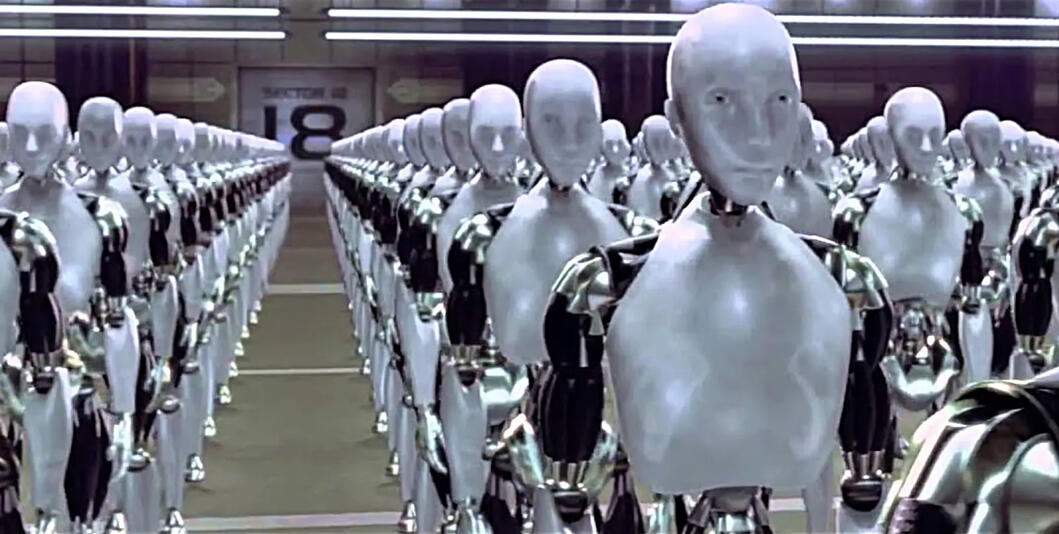
Service humanoids in Alex Proyas's film "I, Robot," starring Will Smith (2004)This class of humanoid "servant" robots, inspired by the aesthetic of the film "I, Robot," has a direct lineage with Japanese manga culture, from Astro Boy (Osamu Tezuka, 1952) to "Ghost in the Shell" (Mamoru Oshii, 1995), but also with the European writers and artists of "Les Humanoïdes Associés" (Jodorowsky, Moebius, Druillet, Bilal…). These artists created a reference iconography for illustrating dark dystopian fictions, drawing notably on the armor of medieval knights and samurai. This cold, metallic look, with frozen, expressionless faces or ones hidden behind a visor, is deeply present in our collective unconscious.
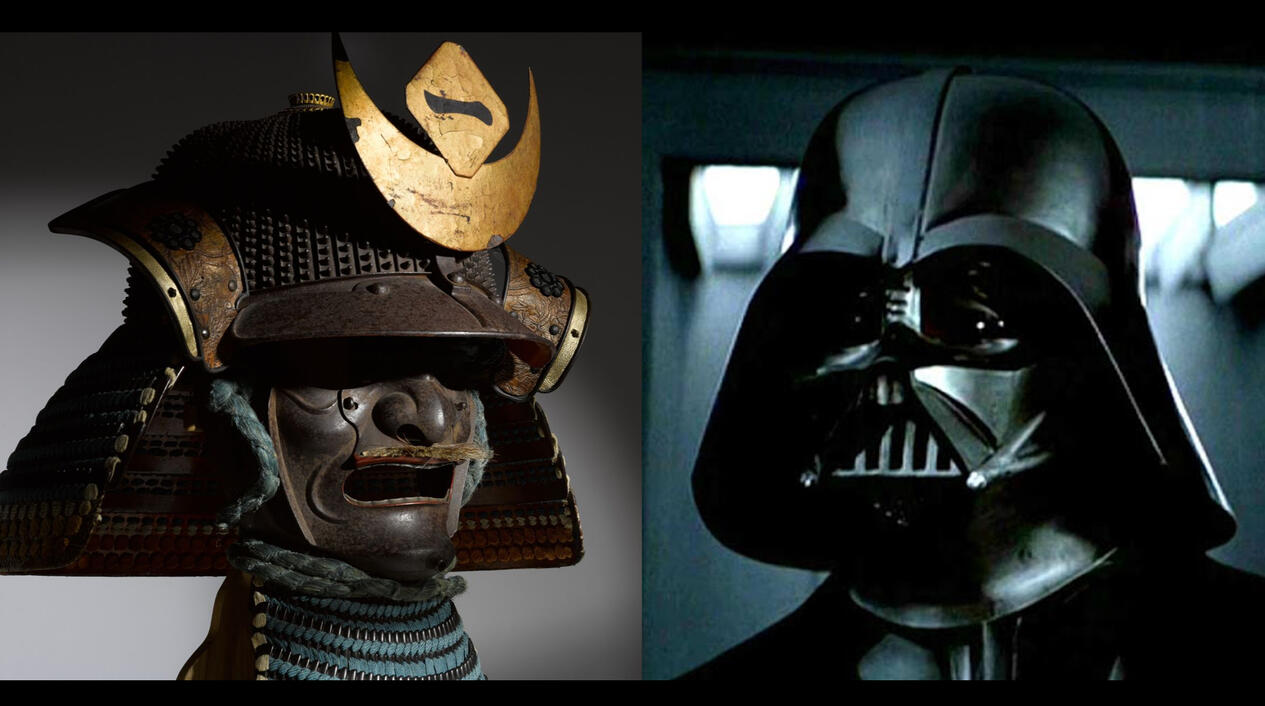
The "Koboshi Kabuto" helmet and mask, which inspired Darth Vader's, comes from a 16th-century samurai lord, "Date Masamune."
The path to neutrality:So, as soon as a gender is assigned to a humanoid robot, especially a masculine style, our unconscious sets in motion behavioral strategies and projections that can be counterproductive, such as the fear of a revolt. For the designer, this approach represents a "no-go," a trap that the "versatile robust domestic" category too easily slides into. Some start-ups will need to rethink their approach.And indeed, the design of the Neo robot (1X), joined by the F03 (Figure AI) and, very recently, by UMA and Robody (Devanthro), addresses this challenge by adding clothing to the robot. This neutral-colored fabric uniform strips away any gender representation. It brings the robot even closer to our social conventions by clearly delimiting its function as a Servant. This garment, like a symbol of dignity, limits personal projections and facilitates adoption into a personal environment for domestic tasks. Much like a school uniform that limits ego projection and encourages obedience, it conveys a promise of safety.
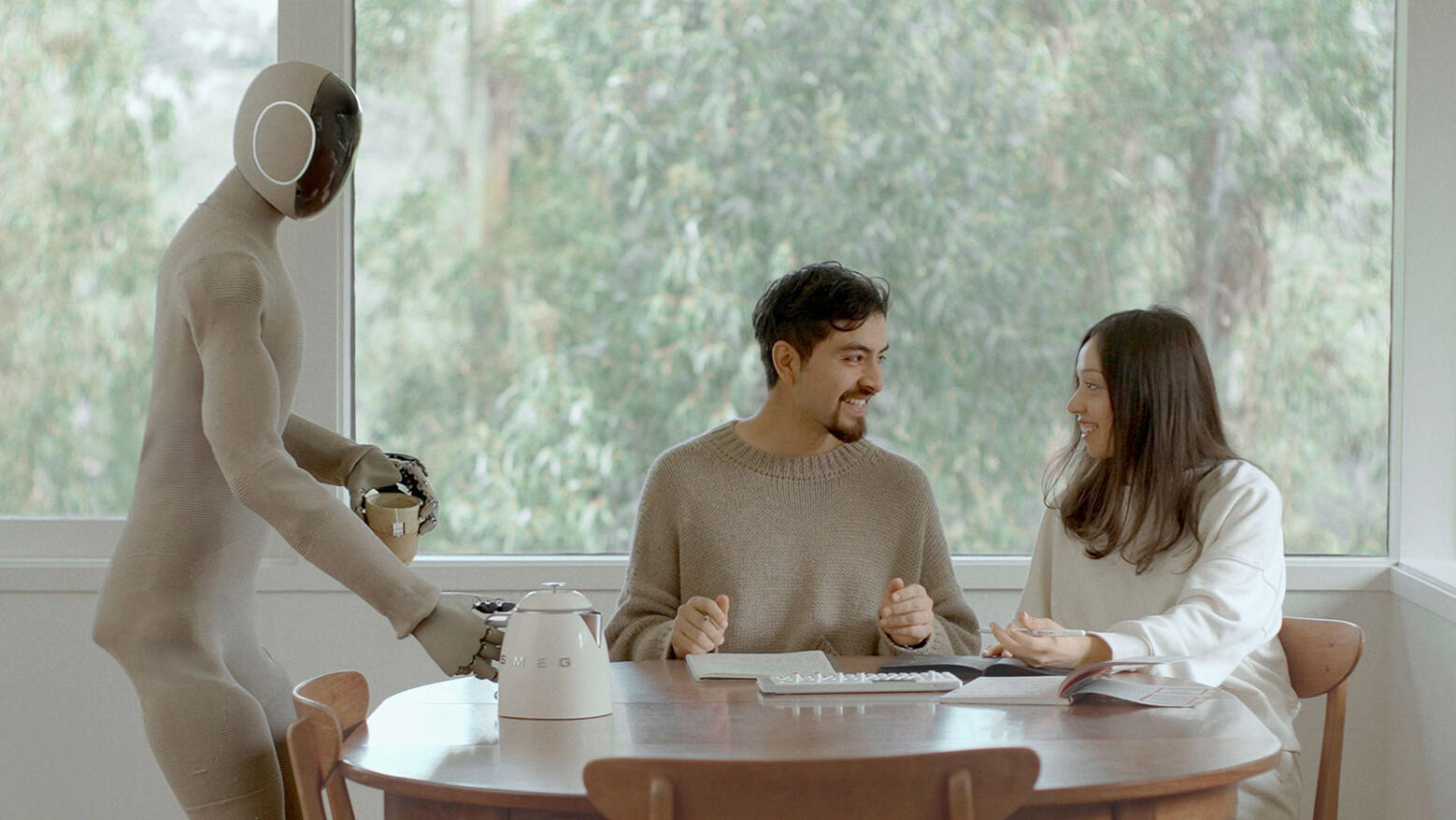
NEO from 1X
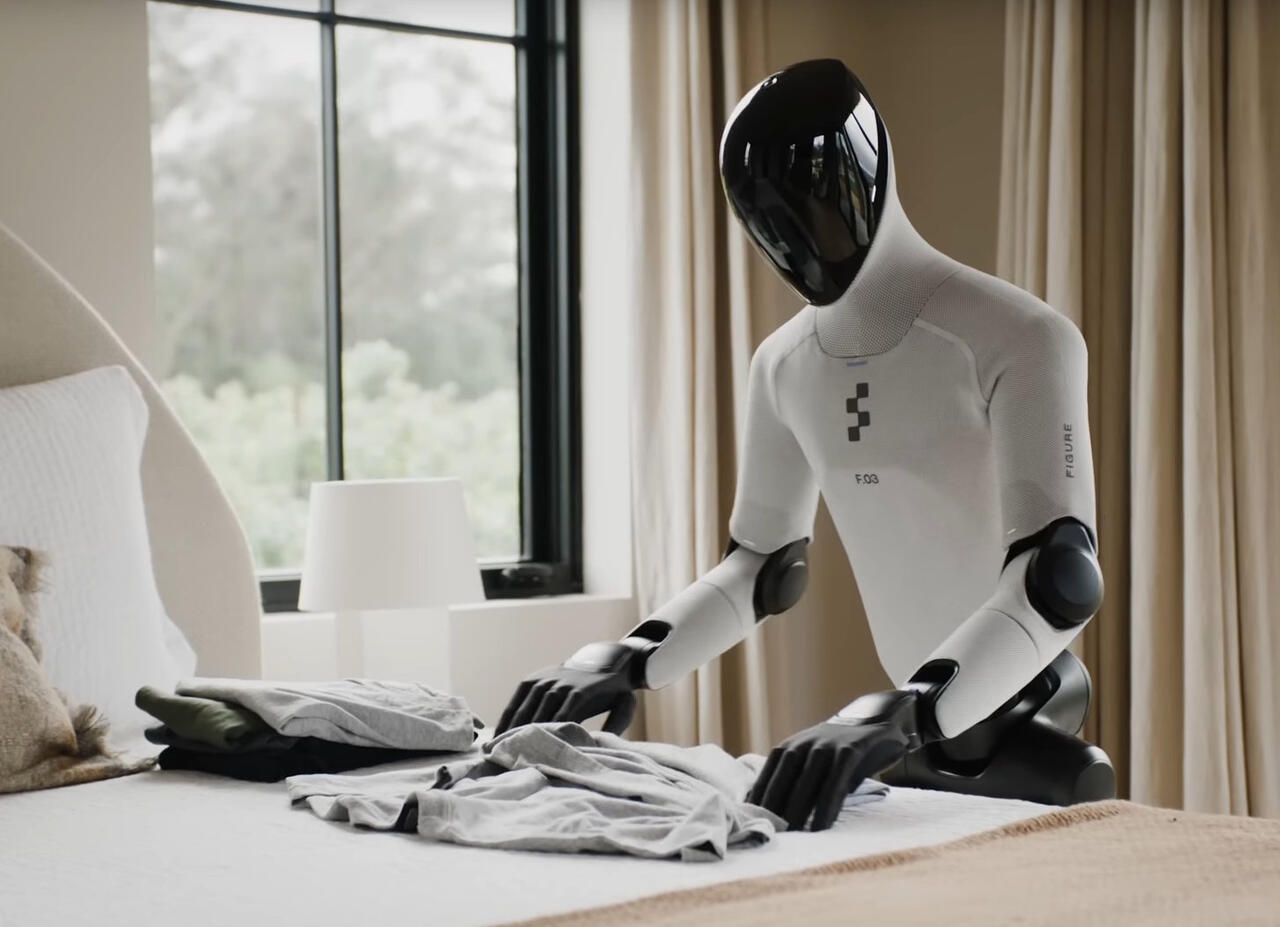
F02 from Figure AI
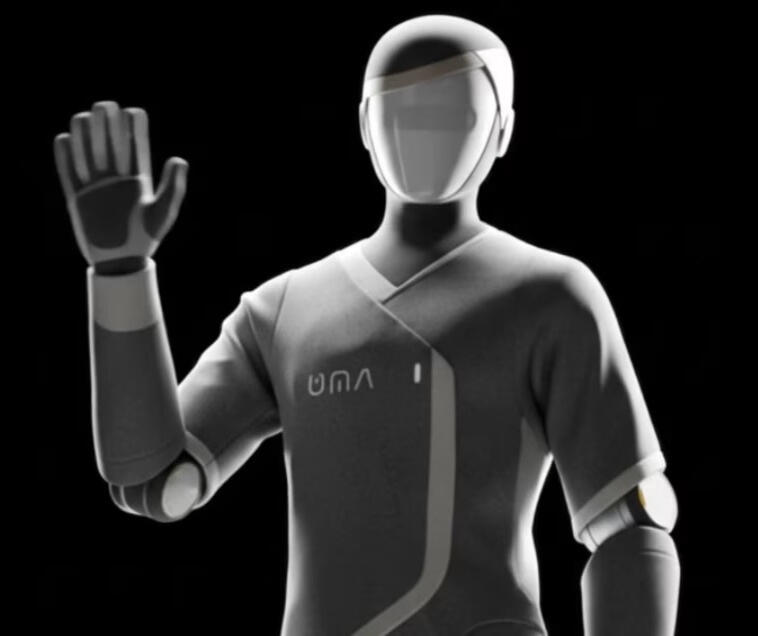
UMA
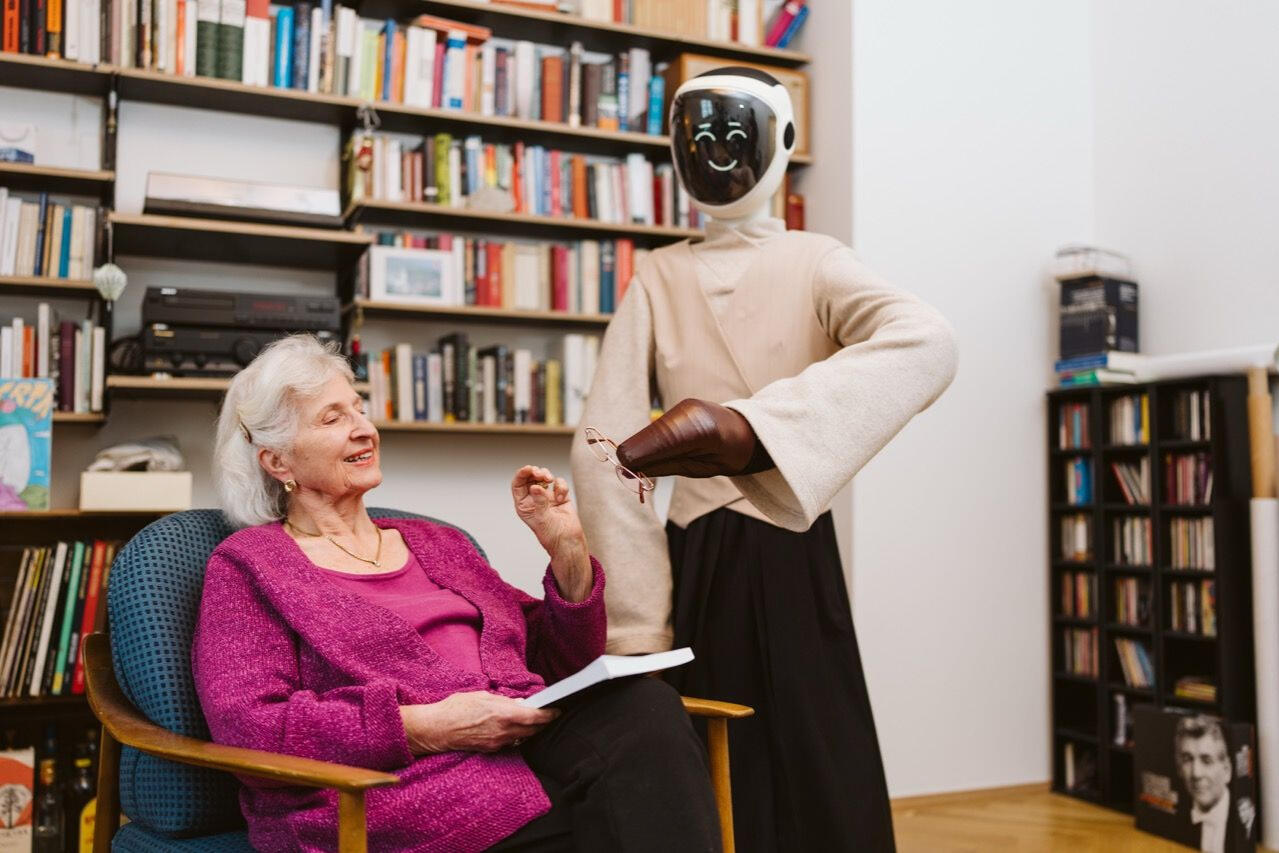
Robody from Devanthro
In my personal opinion, this settles part of the question of the cold metallic texture. What remains to be determined is the ideal shape for the face and hands. The dark smoked glass "hiding" the optical sensors remains unsettling, even though it echoes certain automotive body-panel elements, or our smartphone screens when they're switched off. The hands—their movements, their texture to the touch, and even their warm or cold temperature—are also an important factor for a positive user experience.Ultimately, non-gendered collaborative humanoid robots, with a childlike outfit or style, will be more easily "adopted" and even "respected" by users. Finally, in the industrial context, a large space has opened up for humanoid robots with a purely functional design, without seeking human resemblance.
Sociocultural and ethical context: The stakes of design
A paradox when facing the unknownOpinion surveys reveal a paradox. We massively accept robots in certain contexts (industry, space exploration, assisted surgery) but remain reluctant in others. A robot that cleans the streets? Yes. A robot that watches your children? Opinions are sharply divided.A tutoring robot can offer infinite patience, constant availability, adaptation to each child's pace. But can it act with the same subtlety and pedagogical sense as a human when encouragement or criticism needs to be adapted to a student's emotions, to their family context? How can it show empathy in a moment of discouragement? Yet this is precisely what gives richness to the relationship between teacher and student.But all these questions remain vague or hypothetical. The humanoid robot examples cited are exceptional, and it's clear that as long as they aren't present in our daily lives, we can only formulate hypotheses, and opinion polls will only reveal unfounded apprehensions.It's currently difficult to speak of "social acceptance" when the uses themselves are still unknown. In the meantime, we can simply observe these experimental initiatives, keeping in mind that our society's reference points are evolving alongside these new technologies.
Geographic and cultural variationsExpectations regarding these robots vary across regions of the world, reflecting deeply different cultural values.In the BRICS+ countries, far from the dominant Western outlook, cultural models are evolving very quickly with the emergence of a fairly young new middle class, creating momentum in favor of adopting disruptive new technologies—much like the Western generation of the postwar boom years in the 1960s.
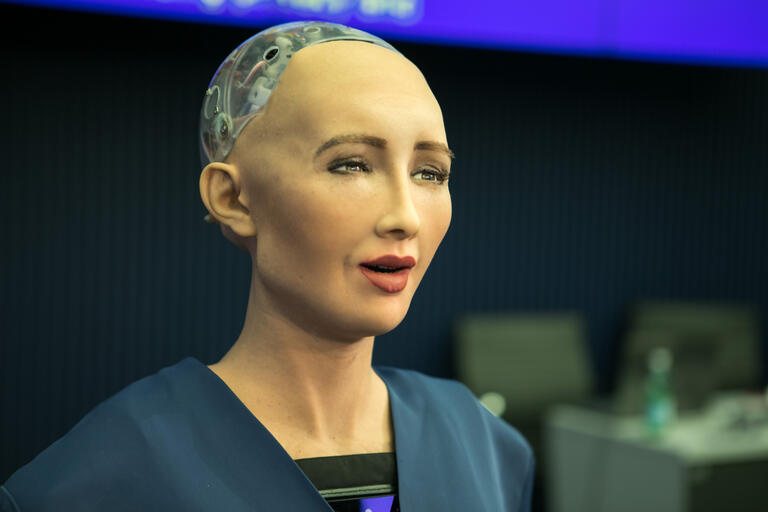
Sophia by Hanson Robotics at the "Future Investment Initiative" summit in Riyadh, 2017In 2017, Saudi Arabia granted citizenship to the robot Sophia at the "Future Investment Initiative" summit in Riyadh. This symbolic gesture signals a determination to showcase rapid adoption of new technologies, with a twofold goal. On one hand, economic diversification to reduce dependence on oil, and on the other, modernizing the country's international image to attract talent and investors.This media stunt raises questions. Can one be a citizen without consciousness, without legal responsibility?For its part, Japan is exploring the notion of "electronic personhood," an intermediate legal status allowing certain rights and responsibilities to be assigned to advanced AIs.Accustomed to the presence of companion robots for more than 20 years, the Japanese population feels less unease than Western populations. Our culture shapes our threshold of tolerance.

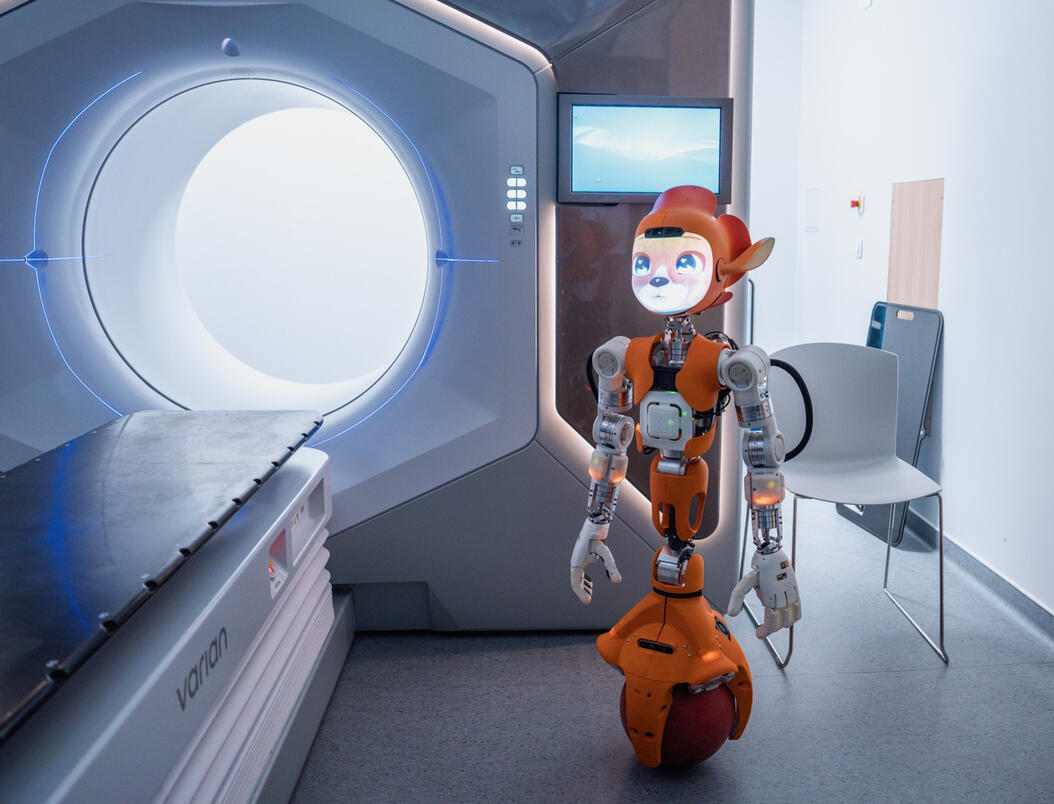
Paro, the Japanese robot designed to accompany elderly people with Alzheimer's, 2005Given the country's aging population, elder care is a sensitive issue. Robots such as Paro in 2005 or Pepper in 2015 have been deployed in retirement homes. As Cécile Dolbeau-Bandin explains in her 2021 book "Un robot contre Alzheimer. Approche sociologique de l'usage du robot Paro dans un service de gériatrie," the results are encouraging: reduced anxiety, cognitive stimulation.In Europe, since 2023 we have begun deploying Mirokaï robots in hospital settings. Reduced anxiety is the first benefit, appreciated by vulnerable populations such as the elderly, children, and people with chronic illnesses. But it is also appreciated by therapists, who find in it an assistant for the patient's emotional support. The patient becomes more cooperative, and the therapist can focus on the treatment itself. Other, more specific tools are then deployed on this platform depending on the needs.
With 700 million surveillance cameras, China has nearly one camera for every two people, compared to 5,000 cameras across the Paris metropolitan area. As a result, the population is more prepared to encounter a humanoid robot for maintaining public order in shared spaces. This even reassures part of the population, for whom a keen awareness of the collective interest takes precedence over personal interests.
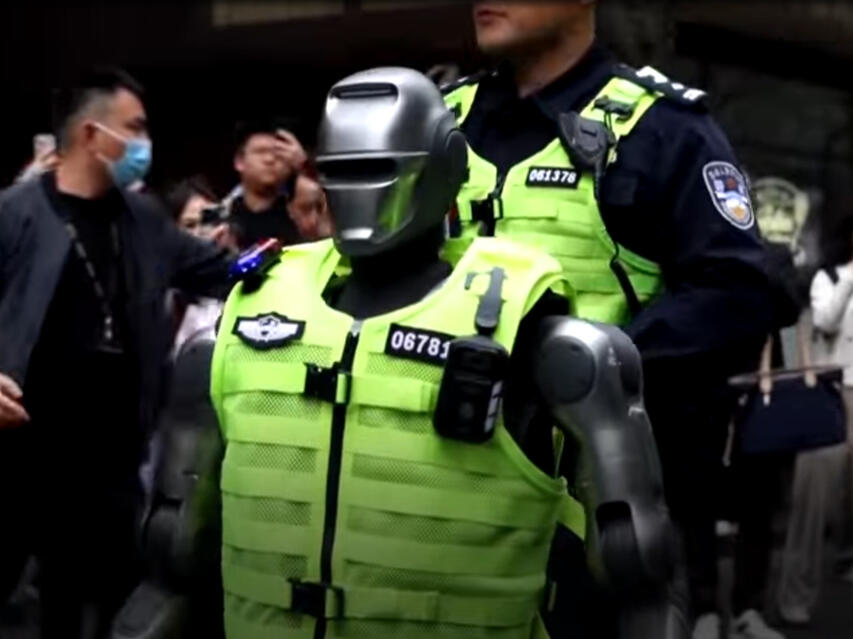
PM01, developed by EngineAI
With a pronounced, deterrent-oriented masculine design, the PM01 was developed by EngineAI. Still in the testing phase, it is capable of making autonomous or semi-autonomous decisions, particularly regarding the reporting of offenses, and currently serves as a deterrent patrol unit.
Early answers to the ethical questions raised by the "promise" of designCan a life-or-death decision be delegated to a machine?Whether for public order enforcement or in the military domain, this question is morally essential."Autonomous killer robots" (LAWS – Lethal Autonomous Weapon Systems) are the subject of an international campaign calling for their ban. The central argument: only a human can bear the moral weight of taking a life. Entrusting this decision to an algorithm means crossing an anthropological red line.Currently, the systems actually concerned by this question are essentially military software programs for AI-assisted target interpretation and designation.Recent multi-agent AI architectures can improve the reliability of results to between 98% and 99%, through effective filtering of model "hallucinations," graph-based contextualization, reinforcement learning to build specialized databases, and rigorous validation testing. This result is in a different league from consumer-facing AI, which hovers around 60% to 90%. And even so, in these sensitive domains, a human expert interprets the final result.The physical presence of an autonomous robot adds a spectacular, media-friendly dimension to the subject, and if it displays an aggressive design, the "promise" it conveys is far from reassuring.But in practice, this makes development and use more complex, particularly to ensure the system cannot turn against its user. Public order professionals and military personnel are more interested in semi-autonomous systems over which they retain control. They develop solutions tailored to specific uses, or, in most cases, simply functional, non-lethal robotics.
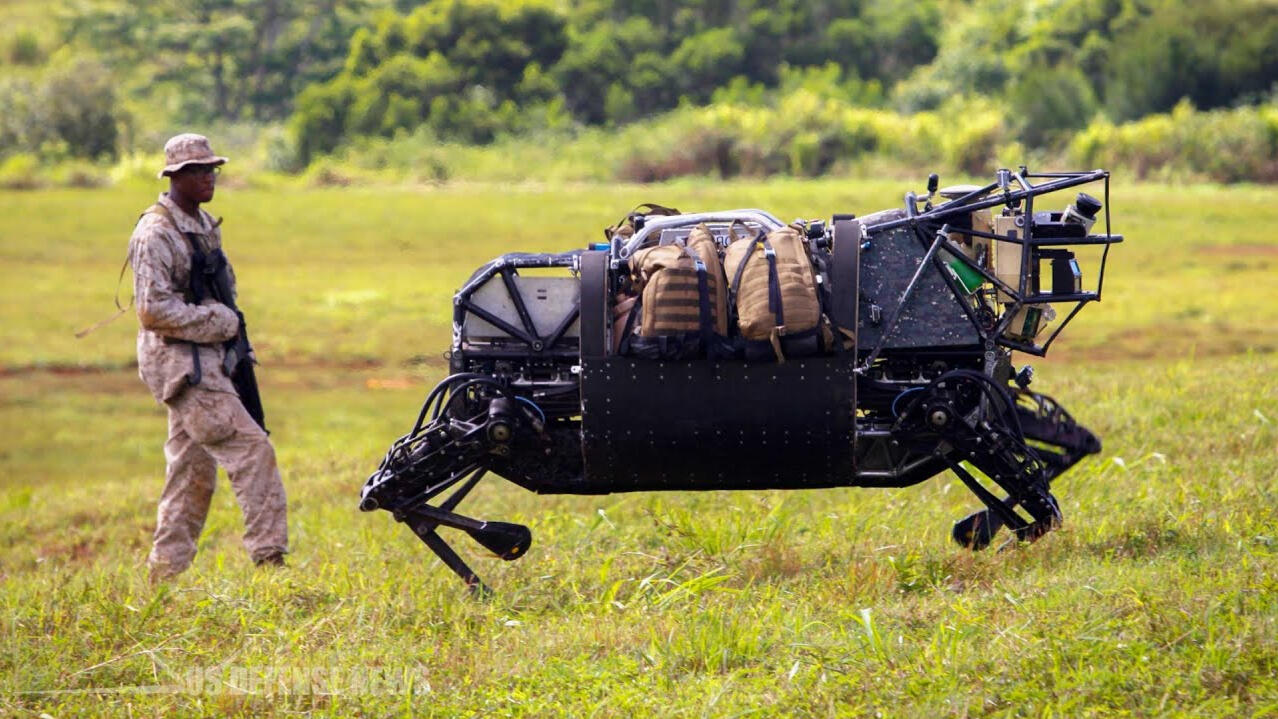
LS3 AlphaDog by Boston DynamicsIn 2012, Boston Dynamics unveiled a quadruped "mule" robot for military logistics support, the LS3 AlphaDog, built on the same architecture as Spot but larger, designed to help soldiers carry up to 180 kg of equipment across rugged terrain. Marines were able to test the prototype during training, but the noise from its small gas turbine engine wasn't discreet enough for real combat-zone use, which led to the program being shelved.In 2022, six robotics companies published an open letter to the robotics industry titled "General Purpose Robots Should Not Be Weaponized."In the absence of strict regulation, they acknowledged that adding weapons to robots that are remotely or autonomously operated, widely available to the public, and capable of navigating to previously inaccessible places where people live and work raises new risks of harm and serious ethical concerns. In the letter, Boston Dynamics, Agility Robotics, ANYbotics, Clearpath Robotics, Open Robotics, and Unitree made a moral commitment not to weaponize their general-purpose, advanced-mobility robots or the software they develop that enables advanced robotics, and pledged not to support others in doing so.They further stated that, where possible, they would carefully review their customers' intended applications to avoid potential weaponization, and added a commitment to exploring the development of technological features that could mitigate or reduce these risks.It's worth noting that this statement says nothing about the use of their robots for surveillance and reconnaissance alongside military or police units. And indeed, for now, the robots that exist in this space are more oriented toward peaceful monitoring and response.
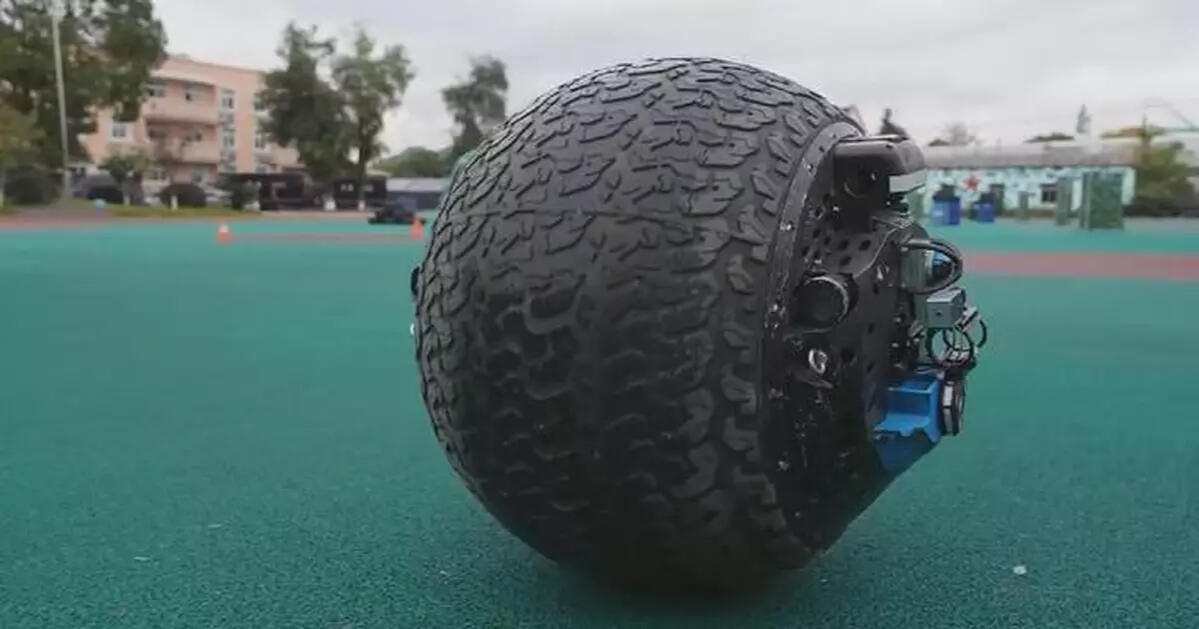
RT-G police robot by Rotunbot, in testing phase in Wenzhou, ChinaThe RT-G police robot (Rotunbot), for instance, was developed in 2025 in China for patrol and intervention missions, without lethal weapons. Far from the humanoid form, with a spherical wheel, weighing 150 kg, and offering 10 hours of battery life, it is capable of neutralizing an individual with a net or by deploying tear gas or smoke grenades. Unlike conventional humanoid robots, it is very fast, around 30 km/h, and has much greater impact resistance to withstand attempts at destruction.Currently remotely controlled, the company plans to give it autonomous capabilities. It has been filmed in trials with police in Wenzhou (Zhejiang) and featured in promotional videos that went viral on social media.Its "functional" design doesn't try to convey authority through a humanoid "alpha" archetype, but it doesn't need to. The visual codes of its dark, compact geometric shape, along with its mobility, speak for themselves.If someone dies as a result of an autonomous robot's decision, who is responsible?
Does a surgical robot assisting in a complex operation make "decisions"? A self-driving car facing a moral dilemma, such as sacrificing its passenger or a pedestrian, makes an ethical choice that was programmed in advance. Where should the line be drawn? A domestic robot accidentally injures someone: who is responsible? The owner? The manufacturer? The algorithm's designer?These questions are legitimate from a human standpoint, but skewed from the machine's standpoint, since it has neither consciousness nor intention. An AI doesn't distinguish between the real world and the virtual world. It processes data, not lived experience. As with any complex machine, it's the quality of the system's architecture, its training, and its validation that determines the reliability of its actions.In the event of harm or an accident, responsibility remains human. But would it now fall to the team that designed, validated, and deployed the system, rather than to the user? Because the very "promise" made by AI and its developers is to relieve the user of the burden of decision-making.
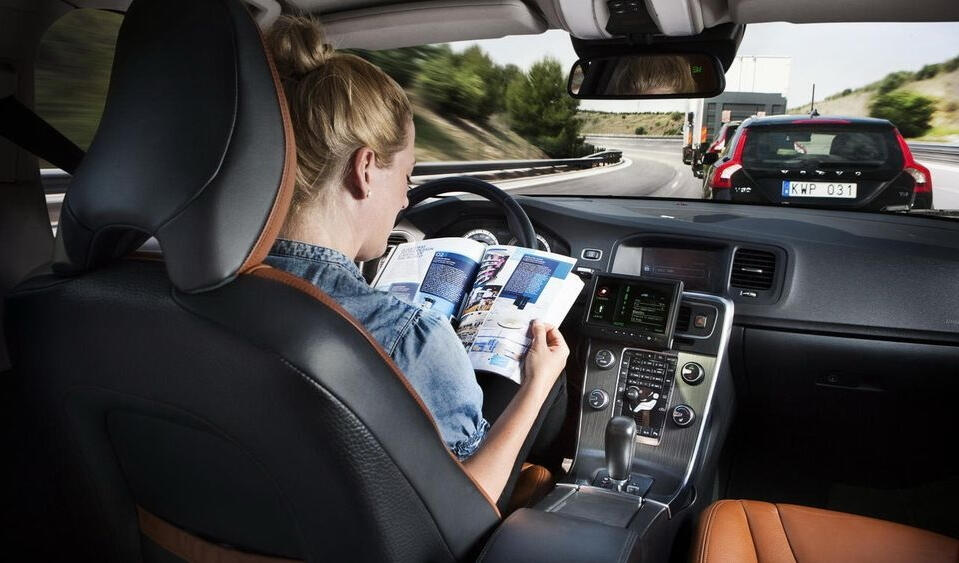
This question is already being debated in the case of autonomous vehicles, and experts remain divided. While the liability of a natural person can be clearly established, an autonomous system can dilute that responsibility across the development chain, making some cases impossible to resolve. Civil aviation investigation procedures, where avionics involve numerous autonomous systems, could serve as a model. But they are long, complex, costly, and better suited to collective proceedings than to an individual accident.
Architecture iteration and regulation:We are currently in a phase of rapid iteration in AI system architectures, particularly with generative agentic AI. Development tools are numerous, frequently updated, and the possible combinations of architectures have become almost infinite. New approaches emerge every month, while some methods considered reliable yesterday quickly become obsolete.There will come a point when this pace slows down in favor of a proliferation of applications. Architectures will become standardized within specific domains, making risk management more reliable. Best practices will then be established, taught, incorporated into new ISO standards, and likely written into legislation.Europe has taken the lead with the AI Act, adopted in 2024. This regulation classifies AI systems by level of risk and imposes proportionate constraints. Humanoid robots intended for the general public fall into the high-risk categories, requiring transparency, traceability, and human oversight.
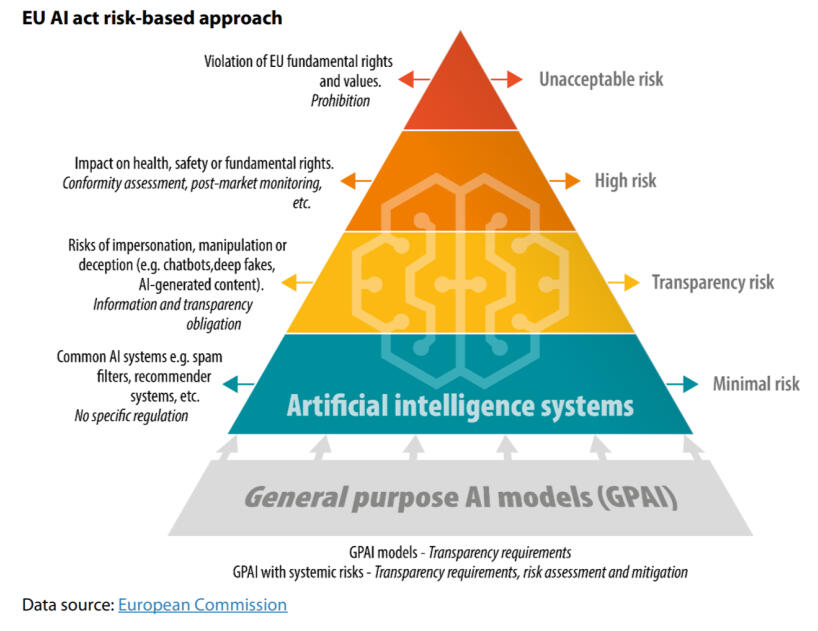
Risk management under the AI ActBionic medical devices are ahead on these issues, since regulation is very demanding when it comes to user safety, even for Class I devices (external, non-implanted).
Standards such as ISO 13485 in Europe or the FDA's 21 CFR Part 820 / QSR in the USA impose strict requirements, which makes it easier to transfer these technologies to other sectors.
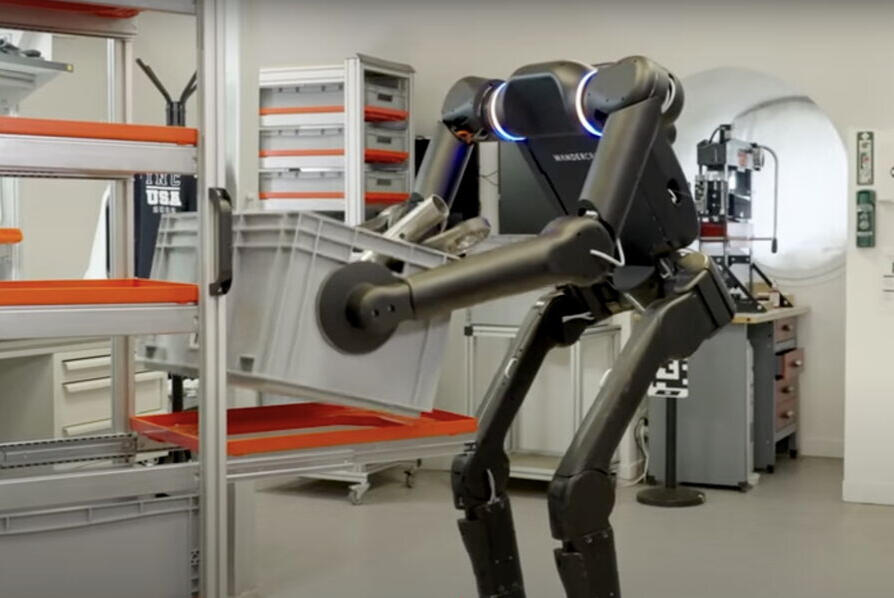
Wandercraft at Renault with Calvin-40For example, Wandercraft was able to fairly easily adapt its medical solutions, such as the Atalante exoskeleton, to automotive industry standards in order to develop its Calvin-40 cobot with Renault.
In this way, bionic hands are helping humanoid robots integrate into our society, just as Masahiro Mori had predicted.
Conclusion: choosing the robots we deserveWe are at a tipping point. Humanoid robots are no longer confined to science fiction or the laboratory. They are about to populate our factories, our hospitals, our homes. But unlike previous technological revolutions, the need to differentiate ourselves from these machines confronts us directly with an existential question: "What defines humanity?"The design of these robots, their appearance, their behavior, their role, is not merely a technical or marketing matter. It is a mirror held up to our society. Hyperrealistic robots that mimic humans may reveal a desire for total mastery, or other shadows of our unconscious. Overtly artificial yet endearing robots suggest that we are seeking less a human substitute than a companion of a new kind. Purely functional robots point to an instrumental relationship, where the machine stays in its place as a tool.None of these choices is neutral. None is universal. The "Humanoid French Touch" that French innovators speak of is rooted in our culture: a certain sense of elegance, a balance between function and emotion, a wariness of pure utilitarianism. This is valuable, because it means we retain the capacity to choose—we are not simply subjected to a single, uniform robotics imposed from elsewhere.Two scenarios are taking shape for the coming decades. The first: we develop a diverse ecosystem of robots, each suited to a particular context, use, and cultural sensibility. Much like the automotive industry, Japanese robots will follow a different approach from Western robots, which will in turn differ from American ones. French robots will play the card of functional elegance. This diversity is enriching.The second scenario is less encouraging. For lack of innovative entrepreneurial momentum, much as happened with smartphones, a handful of tech giants will impose their own standards, homogenizing designs and interactions. We would then lose the ability to choose our robotic companions. They would simply be handed to us, and we would no longer control the deeper settings.Between these two futures, our collective responsibility is at stake. Designers must build ethical rigor into the "promise" of their design, not bolt it on as an afterthought. Lawmakers must anticipate without stifling innovation. And we, as potential users, must demand transparency and control.One last question remains open: how far do we want robots to resemble us? My work in bionics has taught me that there is no single answer. Some patients want an invisible prosthesis; others turn it into a work of art. Likewise, some will love an almost-human companion robot, while others will prefer a clearly asserted otherness.What matters most is that this choice remains ours. That we don't drift, through carelessness or technical fascination, toward robots that resemble us too much, or too little. Because it is in that carefully calibrated gap between similarity and difference that the possibility of harmonious cohabitation is decided.The robots we create say something about who we are. Let's take the time to ask ourselves who we want to be.
Guillaume Bonifas: Robotics and MedTech Entrepreneur, Clinician, Expert in Bionic Solutions and Physical AI.
Carl Jung, "Collected Works of C. G. Jung, Vol. 9, Part 1 - Archetypes and the Collective Unconscious" (1959)
Ortony, A., Norman, D. A., & Revelle, W. (2005). “Affect and proto-affect in effective functioning” Who needs emotions, 173-202.
Cécile Dolbeau-Bandin. "Un robot contre Alzheimer - Approche sociologique de l'usage du robot Paro dans un service de gériatrie" (2021)
LAURA KUNOLD, Ruhr University Bochum, NIKOLAI BOCK and ASTRID ROSENTHAL-VON DER PÜTTEN, RWTH Aachen University, "Not All Robots are Evaluated Equally: The Impact of Morphological Features on Robots’ Assessment through Capability Attributions" (2023)
Dean Aaron Ollah Mobed, Andrew Wodehouse and Anja Maier, "The aesthetics of robot design: towards a classification of morphologies" (2024)---
CONTACT